
Wood Siding vs. Fiber Cement vs. Vinyl: What's Actually Worth the Money on a Custom Home?
Straight from the Slab with Duane Holloway · September 24, 2026 · 5 min read
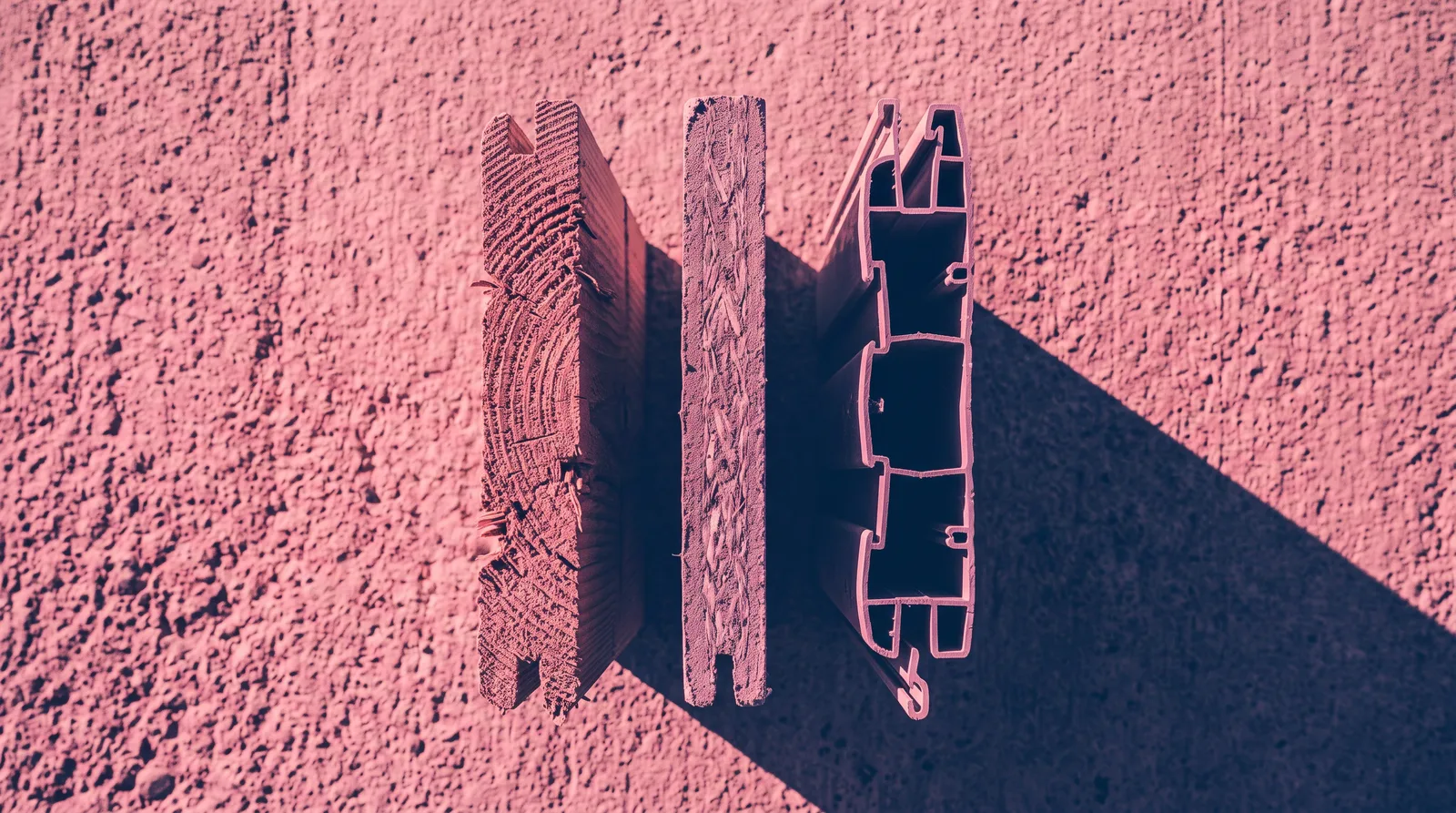
Walk into any siding showroom and every option looks like the right answer. The cedar samples are beautiful. The fiber cement boards feel solid. The vinyl comes in forty colors and the salesperson just told you it's "basically maintenance-free." Nobody's lying to you — they're just not telling you the whole story.
So let me do that here.
I'm going to walk you through the three most popular siding materials for custom homes — wood, fiber cement, and vinyl — with an honest look at upfront cost, long-term cost, performance, and where each one actually earns its place on a house.
The Numbers First (Because You Need a Baseline)
Installed costs vary by region, labor market, and profile complexity, but here are realistic ballpark ranges for a typical custom home project:
- Vinyl siding: $4–$9 per square foot installed
- Fiber cement (lap siding, e.g., HardiePlank): $8–$14 per square foot installed
- Wood siding (cedar or redwood lap): $10–$18 per square foot installed
These are installed figures — material plus labor. Don't compare material-only prices from a big-box store to a contractor's bid. You'll confuse yourself.
On a 2,500-square-foot home with roughly 2,000 square feet of siding surface, you're looking at a potential spread of $10,000 to $18,000 between vinyl and wood. That gap feels enormous at contract time. Whether it's actually worth it depends on what you're comparing.
Vinyl: The Case For and Against
Vinyl wins on upfront cost and zero-paint maintenance — both real advantages. Modern premium vinyl (look for thicker profiles, around .044" or higher) handles UV exposure reasonably well and won't rot.
Here's what the showroom won't emphasize: vinyl expands and contracts significantly with temperature swings. On a custom home with complex trim details or large wall planes, that movement shows. Cheap vinyl looks cheap as it ages — it can warp, fade unevenly, and dent from hail or a misplaced ladder. It also can't be repaired the way wood or fiber cement can; a damaged section typically means replacing a full run.
Best honest use case: Budget-conscious builds in moderate climates where curb appeal matters less than cost control, or rental properties where longevity of appearance isn't the priority.
Fiber Cement: Why It Dominates New Construction Right Now
There's a reason fiber cement has taken over the custom home market in the last fifteen years. It threads the needle between wood's aesthetics and vinyl's durability — without fully sacrificing either.
Fiber cement is dimensionally stable (it doesn't move like vinyl), it holds paint exceptionally well, it resists rot, insects, and fire, and it can be factory-primed or pre-finished. HardiePlank is the dominant brand but not the only one; Allura and Nichiha make competitive products worth pricing.
The honest downsides: it's heavy, which adds labor cost and occasionally requires reinforced sheathing. It must be painted — factory finish options help, but you're still on a repaint cycle of roughly 10–15 years depending on sun exposure and climate. And because it's fiber-reinforced cement, improper installation (exposed cut ends, poor caulking, inadequate clearance from grade) will cause premature failure. Hire someone who has done a lot of it.
Best honest use case: Most custom homes in most climates. It's not the cheapest or the most beautiful option at its peak, but it's the most reliable value over a 20–30 year window.
Wood: When It's Actually Worth the Premium
Wood siding — cedar, redwood, or pine with a quality primer system — is genuinely beautiful in a way the other two materials don't fully replicate. If your design calls for deep shadow lines, a natural grain texture, or a craftsman or farmhouse profile that needs to look right up close, wood earns its price.
But you need to go in clear-eyed. Wood requires a real maintenance commitment: inspection every year, caulk touch-ups, and a repaint cycle of 5–10 years depending on climate and exposure. Skip those cycles and you're looking at rot, which gets expensive fast.
It also matters enormously how the wood is specified and installed. Back-priming every board before installation (coating all six sides, not just the face) dramatically extends service life. Grade matters — clear vertical grain cedar outperforms knotty grades in moisture resistance. These details don't show up in the square-foot price, but they determine whether your beautiful siding lasts 40 years or starts failing at 15.
Best honest use case: High-design custom homes where the authentic material matters to the owner and where there's genuine commitment to ongoing maintenance. Also worth considering for specific applications — gable accents, feature walls — even if the field siding is fiber cement.
The Real Question to Ask Yourself
Don't ask "which one is best?" Ask: What does this specific house need, and what am I actually willing to maintain?
If you're building a custom home to live in for 30 years and you want the exterior to look sharp the whole time, fiber cement is the reliable answer for most people. If your design demands the real thing and you'll care for it, wood is worth the money. If budget is the binding constraint, quality vinyl installed correctly still beats an underfunded fiber cement job.
The showroom can't answer those questions for you. But now you can.
This post is drawn from the material inside The Exterior Finish — my course covering every exterior finish decision for custom homes, from siding and stone to roofing and trim. If you want to go deeper on installation standards, manufacturer comparisons, and how to read a contractor's siding bid line by line, that's where to go.